
3 minute read
For decades, the career advice was simple: pursue knowledge work, get specialized training, and you’ll have security. Cognitive work requiring education and expertise would remain safely in human hands.
That certainty is evaporating fast.
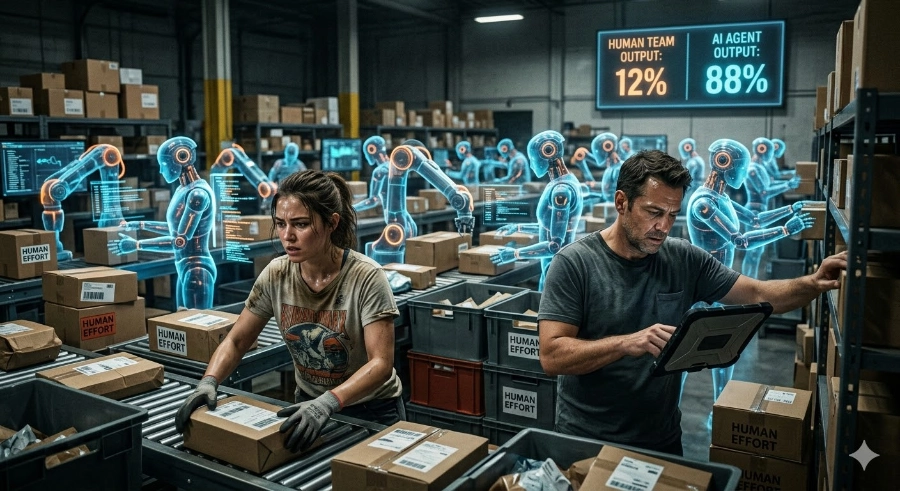
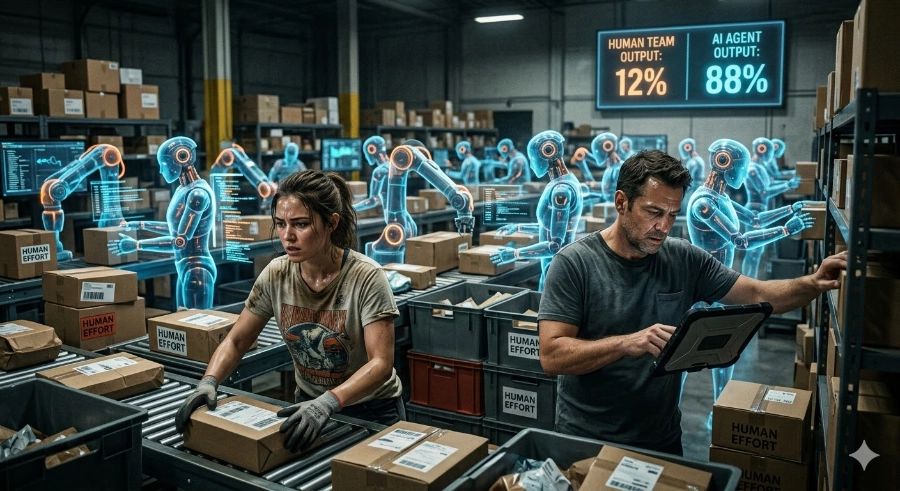
Matt Shumer, an AI startup founder, recently published an essay at https://shumer.dev/something-big-is-happening describing what’s already happened to him. By February 2026, he’s no longer needed for the technical work of his job. He describes what he wants built in plain English, walks away, and returns hours later to find sophisticated applications completed. Better than he would have done them. The AI builds, tests, iterates, and refines on its own, showing what he calls “judgment” and “taste.”
This matters because software engineers weren’t targeted first by accident. AI companies focused on coding because building better AI requires code. If AI writes that code, it builds the next version of itself. Smarter, faster, better. That feedback loop has begun. What automated software engineering is now being applied everywhere else: law, finance, medicine, consulting, writing, design.
The pace is staggering just look at it:
- 2022 – AI couldn’t do basic arithmetic
- 2023 – AI passed the bar exam
- 2024 – AI wrote working software
- Today – AI writes and tests software by itself!
A year ago, AI could only handle tasks that took human experts ten minutes. Now it completes tasks that take humans nearly five hours, with capability doubling every seven months.
AI will eliminate 50% of entry-level white-collar jobs within one to five years.
Anthropic’s CEO predicts AI will eliminate 50% of entry-level white-collar jobs within one to five years. If your job happens on a computer (reading, writing, analyzing, deciding), AI is coming for significant portions of it. The timeline isn’t “someday.” It’s already starting now.
Unlike previous automation, AI doesn’t leave convenient gaps to retrain into. It’s a general substitute for cognitive work, improving simultaneously across all domains. Whatever you retrain for, it’s improving at that too.
The circle of “safe” jobs isn’t just shrinking. It’s shrinking at an accelerating rate. The question isn’t whether to worry, but whether to engage now while there’s advantage in being early, or wait until change is forced upon you.
Learn AI tools now whiles there’s still time
The smart move? Start learning AI tools now. Spend time with ChatGPT, Claude, or other platforms. Not just casual questions, but actual work tasks. See what they can do. More importantly, keep watching how their capabilities expand month by month. The people who stay ahead aren’t the ones clinging to old ways of working. They’re the ones adapting as the technology evolves, finding ways to work with AI rather than pretending it doesn’t exist. That early adoption could be the difference between leading the change in your field or scrambling to catch up when everyone else figures it out.
Want to read about more great AI topics?
- AI Hallucinations in 2026: Still a Problem

- Self-Driving Cars: Ready for Primetime or Still a Highway Pipe Dream?
- SpaceX Bought Cursor for $60 Billion, OpenAI Cut It Off in Days

- Tim Cook Just Gave Up the Chair, and Here’s Everything He Left for John Ternus

- Why I Switched from Openclaw to Hermes

- Your Nurse is Using AI Now and Nobody Told You