2 minute read
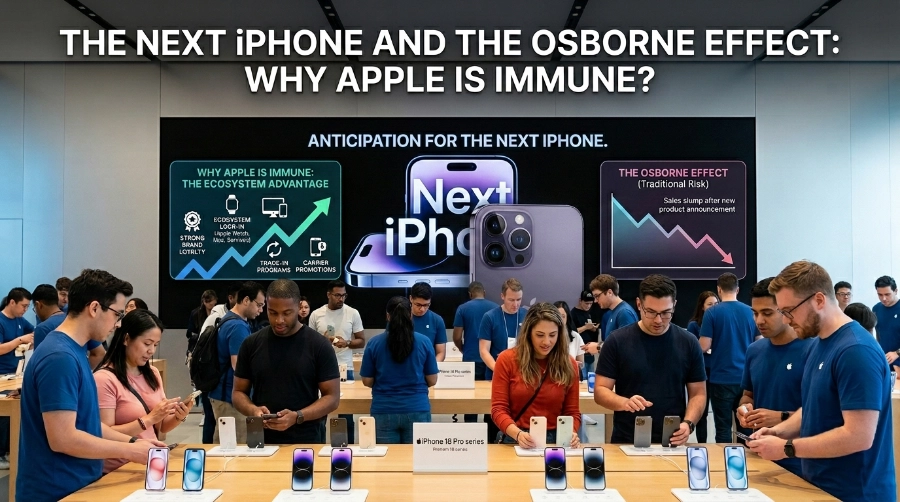
So, it’s the early 1980s, and the Osborne Computer Corporation decided to commit the ultimate auto goal. They announced their shiny new next-generation computer while their current model was still flying off the shelves. Customers did exactly what anyone with a brain would do. They stopped buying the current junk to wait for the better stuff. Sales cratered, and the company went bankrupt before the new machine could even hit the market. Say hello to the Osborne Effect. It has haunted the tech industry for decades as a cautionary tale for any brand that dares to hype the future and to hell with the present.
The Modern Dilemma: Leaks vs. Sales
Fast forward to April 2026. Now we’re drowning in Dark Cherry iPhone 18 Pro renders and leaked schematics of the 2nm A20 chips. We also just saw the massive industry news of John Ternus stepping in as CEO to succeed Tim Cook this September. By all traditional laws of economics, the iPhone 17 should be sitting in warehouses gathering dust while users wait for the “New Era” under Ternus. Yet it isn’t. Apple has achieved what no other tech giant has managed. They have absolute immunity to the Osborne Effect, and it’s honestly impressive how they keep everyone on the hook.
The High Velocity Trade In Engine
This immunity is built on a foundation of incredible residual value. In 2026, an iPhone still only loses about 22% of its value in its first year. Compare that to nearly 50% for competing flagships that basically become paperweights the moment you open the box. While other smartphones are viewed as disposable electronics that depreciate like a used sedan with a bad transmission, the iPhone has evolved into a form of stable currency.
When you buy an iPhone today, you aren’t missing out on the future. You are buying a high-value asset that acts as a down payment for the next model. Apple’s trade-in ecosystem has turned hardware ownership into a predictable subscription model where the upgrade cost is always manageable. For the end user, this removes the stress of trying to “time the market” like a Wall Street intern. If you buy an iPhone 17 in April, you know exactly what its trade-in value will be in September. You aren’t losing money by not waiting. You are simply leasing the best technology available today while everyone else waits for a rumor.
Predictability as a Defensive Moat
Apple has successfully turned predictability into a defensive moat. While Adam Osborne’s fatal mistake was the uncertainty of his timeline, Apple is a machine. September is a law of nature, right up there with death and taxes. This rhythm allows consumers to plan their lives around a hardware cycle without the fear of a surprise release making their device obsolete overnight.
Furthermore, users know that a device bought today will receive software support until at least 2032. This long-term commitment to legacy hardware means the utility of the phone doesn’t drop just because a newer, shinier model exists. This predictability removes the psychological barrier to purchasing mid-cycle. If your current phone fails or breaks in April, you don’t spend five months struggling with a cracked screen and a dying battery while waiting for a rumor. You buy now because the utility of a working phone today outweighs the marginal gain of a new camera sensor or a slightly faster processor in the fall.
Ultimately, Apple has mastered the art of selling the “now” without sabotaging the “next.” They have created an ecosystem where the hardware you hold in your hand is always relevant, even when the tech press is already looking toward the horizon. For the millions of users currently drooling over the iPhone 18 leaks, the message is clear. The best time to join the ecosystem is whenever you actually need a phone, because in the world of Apple, the future never actually devalues the present. Unlike the rest of the tech world, Apple figured out how to make their customers stop waiting and start paying.
- Apple Just Raised Prices on Basically Everything and their Stock Shows it!
- The Memory Crunch Got So Bad That Even Apple Tapped Out
- Apple Just Spent Tim Cook’s Last Keynote Admitting It Lost the AI Infrastructure War