
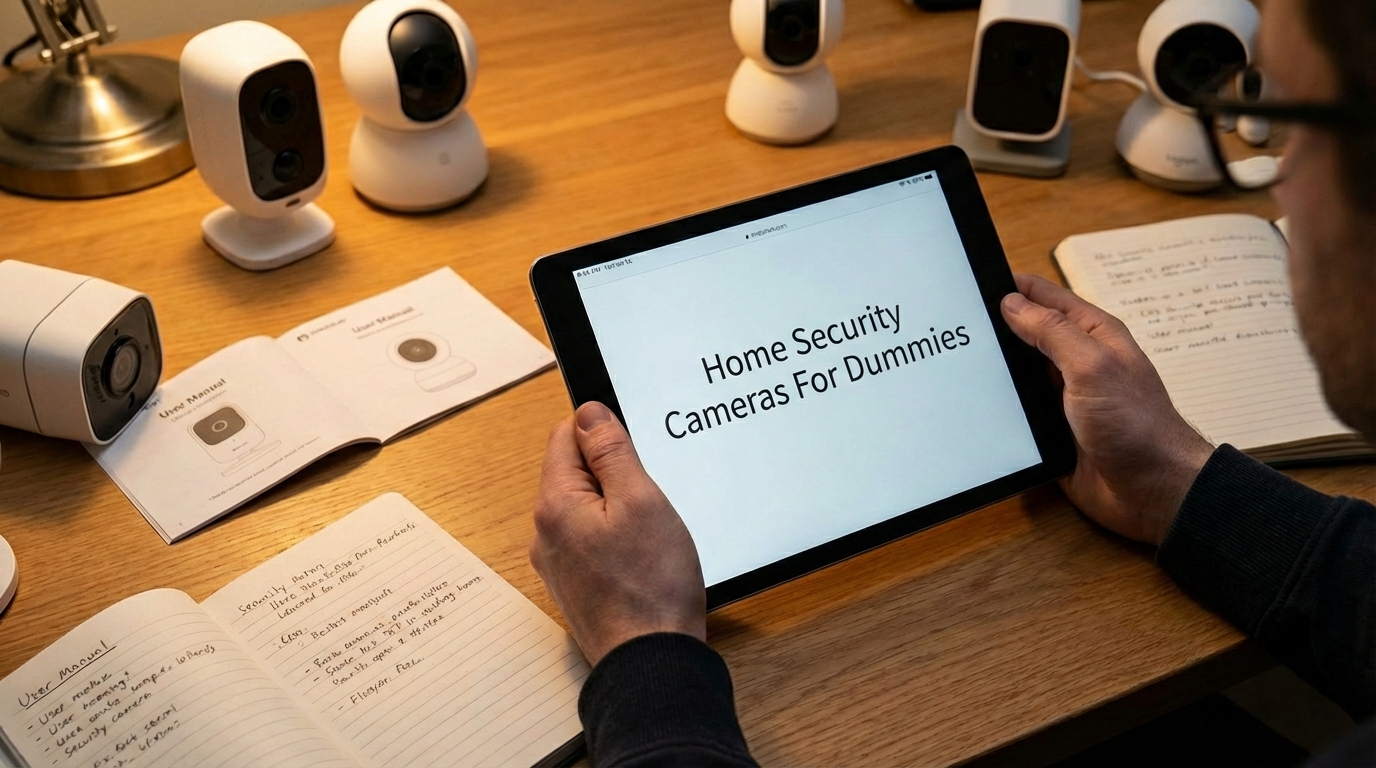
I’m currently testing both Ring and Reolink at my house, so I have a personal stake in figuring out which one actually delivers. Here is what I’ve learned so far and what anyone shopping for home security cameras should think about before buying.
Wired vs. Wi-Fi
Wired PoE (power over ethernet) cameras are reliable and tampering with them is harder. That said, you won’t find me crawling through my attic to run those cables, and hiring someone to do it can easily run several hundred dollars. Wi-Fi cameras are the more practical choice IMHO. You plug them in, connect them to your Wi-Fi and you’re golden. The trade-off? Weak signals or dropped connections can leave gaps in your coverage. If the signal strength is too weak, get ready for painfully slow waits to open live video or worse, no video at all.
What to Look For
Resolution, night vision, and weatherproofing are table stakes, meaning you just need them at least for outdoor cams. Also For outdoor cameras, look for an IP65 rating or better. Beyond that, PTZ functionality is something worth paying attention to. PTZ stands for pan, tilt, and zoom, meaning the camera can actually move rather than staring at one fixed spot. The Reolink E1 Zoom I tested indoors does this well. I could pan, tilt, and zoom from my phone, which was a cool advantage over Ring’s fixed indoor cameras. If something happens outside that fixed frame, you can miss it. Devil’s advocate: A RING camera with wide field of view can nearly see 2 rooms if placed properly.
Reolink also includes person and pet detection, which cuts down on pointless alerts. Instead of getting pinged every time a branch moves, the camera distinguishes between a person walking through and your dog roaming the living room. That kind of filtering matters more than you’d think.
RING doesn’t equal Privacy
Ring runs entirely on cloud storage through Amazon’s servers, which means your footage lives on Amazon’s infrastructure. The company has acknowledged that employees can access user videos under certain conditions and has handed footage to law enforcement without user consent. That is a real concern. Reolink stores footage locally on a microSD card, so it stays on your property and nobody else has access to it. UPDATE: They do offer “RING Edge” which has a base with MicroSD for local storage BUT they want an extra $10/month and I need to buy the base. Kind of feels like I’m paying them just for the option of keeping my data to myself :-/

Other Brands Worth Considering
Arlo is solid for battery-powered outdoor cameras with no wiring. Eufy seems to be another is a strong pick for local storage with no monthly fees. Nest Cam works well if you are in the Google ecosystem and want solid AI detection. Eufy C120 cams are crazy cheap like $35 each. That sounds interesting and more affordable. Also Eufy supports apple home kit natively and Google. Hmm.
Final Thoughts
So far in my testing, Reolink “was” pulling ahead. The PTZ flexibility, smart detection, and local storage privacy add up to a package that is hard to argue with. The privacy question alone might be enough to settle it. But check the quick update below to see what happened.
QUICK UPDATE: Sorry, but the Reolink went back to Amazon! Too different, and the wife, well, keep your partner happy folks don’t mess with their workflow too much. Don’t get me wrong for some Reolink will work great so feel free to try it out and make your own choices.
I use Alexa and Siri commands to automate things; messing with that will just complicate everyone’s life in this household. So, for now it’s still RING cameras and doorbell. Buuuut, I’ve heard good things about Eufy so stay tuned I might try them one day 😉