
2 minute read
Tesla put nobody in the front seat and called it a launch
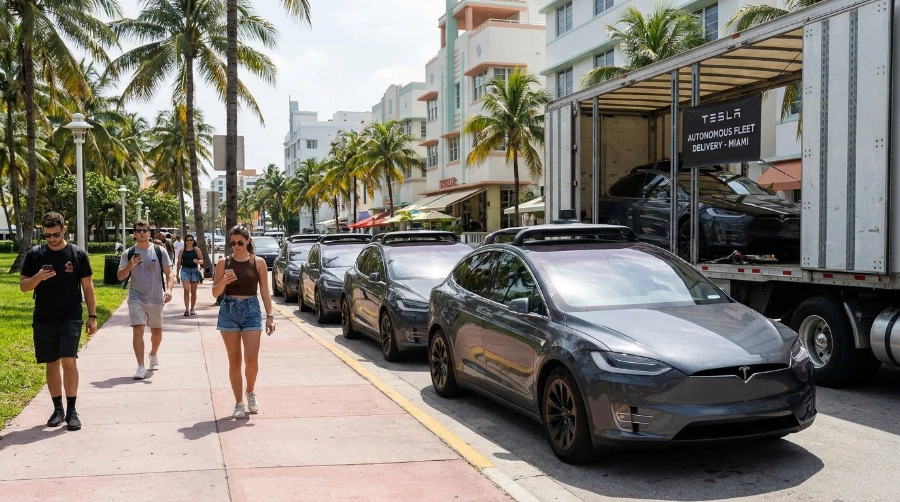
So Tesla did the thing everyone was nervous about. On July 3, driverless Model Y robotaxis started picking up real people in Miami with no safety driver, no monitor, no human anywhere in the car. Ashok Elluswamy, Tesla’s AI boss, confirmed it on X. This is the first time Tesla went fully driverless in a brand new city on day one, skipping the whole “let a nervous employee ride shotgun for a few months” phase it used in Austin, Dallas, and Houston. Bold. Or reckless. Depends who you ask before your coffee kicks in.
The timing is either genius or a middle finger
Here’s the spicy part. This landed days after Waymo, the supposed careful grownup in the room, got hit with its second recall in about a month. Nearly 3,900 of its robotaxis were pulled to fix software after cars drove straight into freeway construction zones. Thirteen incidents. Cones, closed ramps, active construction, and the car just kept going. So Tesla looked at its main rival tripping over orange barrels and said “cool, we’ll go full send in a hurricane state.” You almost have to respect the audacity.
Miami is basically the final boss for camera-only cars
Tesla runs on cameras only. No lidar, no radar, no fancy laser point clouds like Waymo. And Miami is the worst possible place to test eyeballs-only driving. Tropical downpours, blinding sun glare off wet roads, storms that show up out of nowhere. Federal regulators already flagged this exact weakness. In March, NHTSA said the camera setup struggles to see properly in glare and low visibility. Now those same cameras are the only thing between a passenger and a light pole. No pressure.
The fleet is tiny and the map is huge
Don’t picture a swarm. Tesla hasn’t said how many cars are actually running in Miami, and the geofenced zone is a cautious 10 to 14 square miles that dodges downtown, the airport, and Miami Beach. Bloomberg pegged Tesla’s entire national footprint at roughly 59 robotaxis. Waymo runs thousands and does over 500,000 paid rides a week. So this “aggressive rollout” is aggressive in attitude, not in scale.
So are Miami riders guinea pigs or is Tesla just right?
Both things can be true. Tesla is betting that regulators are too twitchy and that cheap camera-only cars will rack up millions of clean miles and make lidar look like overkill. If it works, Waymo’s whole expensive approach gets questioned overnight. If it doesn’t, well, the person finding out is a passenger with no wheel to grab. Musk himself said safety validation is the thing holding back expansion, which is a funny thing to say while removing the human. Miami is the test. The next few months tell us who was right.
Sources: Tesla, TechCrunch, CNBC, Reuters, Bloomberg, HNGN, Automotive World, NHTSA