
2 minute read
Brussels Drops the Hammer in Copenhagen
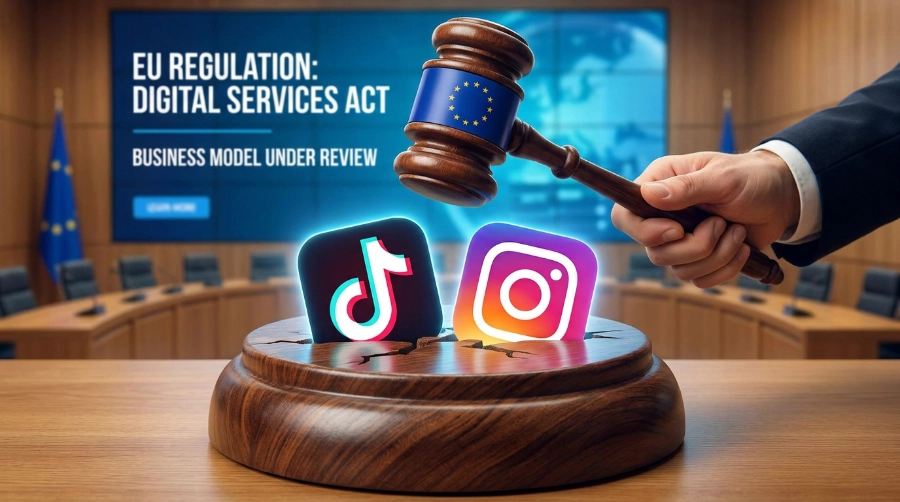
On May 12, EU Commission President Ursula von der Leyen stood up at a summit in Copenhagen and basically told social media giants the party is over. She said the harms kids face online are not accidental. They are, in her words, the result of business models that treat children’s attention like a commodity. Translation: the way these apps make money is the problem, and the EU is coming for it. This time, she’s bringing a law.
The Digital Fairness Act Comes for the Fun Stuff
By the end of 2026, the EU plans to drop something called the Digital Fairness Act. The targets? Endless scrolling. Autoplay. Push notifications. Recommendation algorithms. You know, the entire reason your kid can’t put the phone down. Strip those out and what’s left of TikTok or Instagram? Not much. That’s kind of the point. Brussels figured out “just be more responsible” doesn’t work when the product is engineered like a slot machine.
X Is in the Crosshairs Too
While we’re on the subject of “the EU is fed up,” the Commission opened a formal investigation into X back in January for letting Grok generate sexualized deepfake images, including ones of minors. Yes, that happened. Yes, it’s as bad as it sounds. The EU’s tech commissioner called sexual deepfakes of women and children a violent form of degradation. X tried to fix it by making image generation a paid feature, which one UK official called insulting. Hard to argue with that.
The Dominoes Are Already Falling
Australia went first. On December 10, 2025, the under-16 ban kicked in. Within weeks, platforms had removed 4.7 million accounts. Spain announced its own under-16 ban in February. France’s lower house passed a bill banning social media for kids under 15. The UK is “consulting.” Norway plans legislation by year-end. Turkey passed restrictions in April. This is not a slow trickle anymore. It’s a stampede.
Meta Already Lost in an American Courtroom
On March 25, a Los Angeles jury hit Meta and Google with a $6 million verdict for designing addictive platforms that harmed a young user. It’s the first time a US jury said the architecture itself, not the content, was the problem. Infinite scroll. Autoplay. Algorithmic rewards. Same features the EU is targeting. Meta is appealing. Of course they are. But over 235 federal lawsuits are stacked behind that verdict, a Massachusetts high court just cleared its own case to move forward, and in May the US Supreme Court refused to hear Meta’s bid to dodge a similar suit out of Vermont. The dam isn’t just cracking. It’s giving way.
What Parents and Platforms Should Expect
For platforms, the engagement-at-all-costs model is finally getting expensive. For parents, the next year or two means real changes to what your kid can access, how, and when. The features that hooked an entire generation aren’t disappearing overnight. But for the first time, the people who built them are losing the argument that nothing can be done.
Sources: European Commission, Euronews, CNBC, NPR, Reuters, Associated Press, TechCrunch, CNN, PBS, Al Jazeera