
3 minute read
Owning your machine used to be a whole vibe
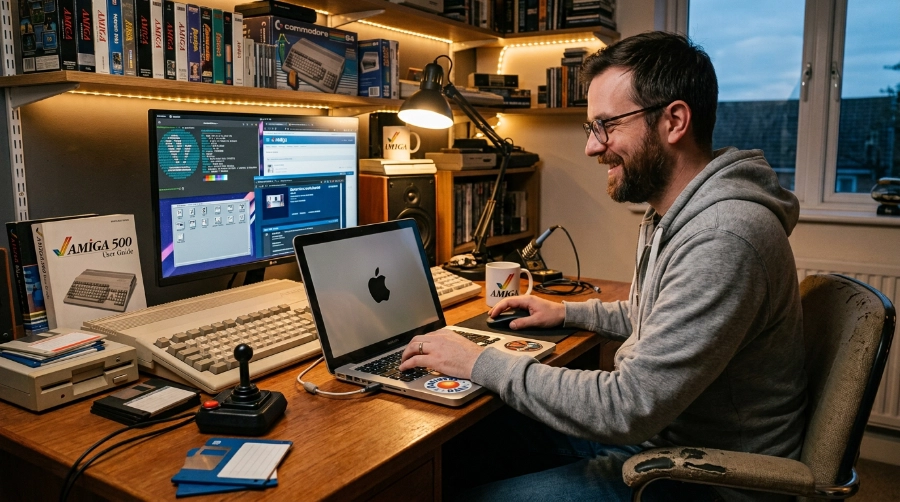
I started on AmigaOS, back when using a computer meant actually understanding it, not just picking a wallpaper. You cracked the thing open and rearranged its guts. Most operating systems now just let you configure stuff inside a box someone else built. Omarchy is the first thing in years that made me feel like I could bust out of that box.
Everything is actually visible for once
Hyprland configs, startup scripts, keyboard shortcuts, system services. None of it hides behind six menus and a support forum. It sits there, readable and editable, daring you to touch it. If something annoys you, you don’t complain, you fix it.
An ancient MacBook got a second life
I threw Omarchy on an Apple laptop pushing ten years old, one being politely nudged into retirement by its own software updates. The hardware was still fine, it just needed an operating system that didn’t treat it like dead weight. Suddenly it felt brand new.
The real trick was adding an agent
The laptop running well wasn’t even the interesting part. Pairing Omarchy with Hermes Desktop, an AI agent that lives on the system instead of trapped in a browser tab, changed everything. I stopped hunting through forums and copy pasting commands. I just said what I wanted and let it dig through the machine.
Getting hardware to behave took teamwork
The Touch Bar on this thing was never officially supported outside macOS, which usually means give up now. Instead I went driver hunting, tried different kernels, and poked around with the agent until it worked. That’s the stubborn troubleshooting computers used to require, minus needing a PhD in kernel modules first.
A missing button became a tiny life lesson
I wanted to dismiss a notification and there was no close button. Old me would’ve shrugged and lived with it. New me just added one. That’s the whole difference between personalizing something and actually owning it.
The agent is basically a third way into the OS
There’s the desktop, there’s the terminal, and now there’s the agent on top of both, translating what I want into what the machine needs to do. I stopped speaking Linux and started speaking plainly.
Openness is what makes this whole thing work
Omarchy is built out of text files and scriptable pieces that don’t fight back when you poke at them. That transparency is what makes an agent useful here. Try this on a locked down platform and the agent just hits a wall of somebody else’s rules.
This might be bigger than app based AI
Everyone’s busy hyping agents that live inside your email or browser. The more interesting one might be the agent that understands your actual machine, your hardware quirks and weird preferences, instead of just another app sitting on top of an OS you don’t control.
Computers can be yours again
Millions of people running the exact same interface isn’t personal, it’s just uniform. Add an open system and an agent that actually helped shape it, and your machine turns back into something that’s actually yours, the way the Amiga always felt.