
3 minute read
Samsung’s smart glasses are coming, and privacy is the whole story
Samsung finally showed off its smart glasses at Galaxy Unpacked in London, and true to form, it didn’t call them “smart glasses.” Nope, we’ve got “Intelligent Eyewear” now. Two designs came out of the gate, one with Warby Parker and one with Gentle Monster, both packing a Qualcomm chip, a camera, an LED, and a line back to your Galaxy phone.
The spec sheet before the freakout
No display, up to nine hours of battery, and a voice-first setup leaning on Gemini to identify what you’re looking at, translate menus, or summon Bixby for the boring stuff. No confirmed price, though leaks floated $379 to $499. Fall is the target.
What to do about “bad uses” of new tech
Samsung’s XR head, Choi Jae-in, didn’t dodge the privacy question, he leaned into it. Explaining why the glasses aren’t pulling back despite backlash hitting the whole category, he put it plainly: “intentional bad uses need to be covered and protected” but “if because of that, we stop innovation, we don’t go anywhere.” Translation: someone’s going to misuse these, and that’s not stopping the launch.
What that actually looks like at your coffee shop
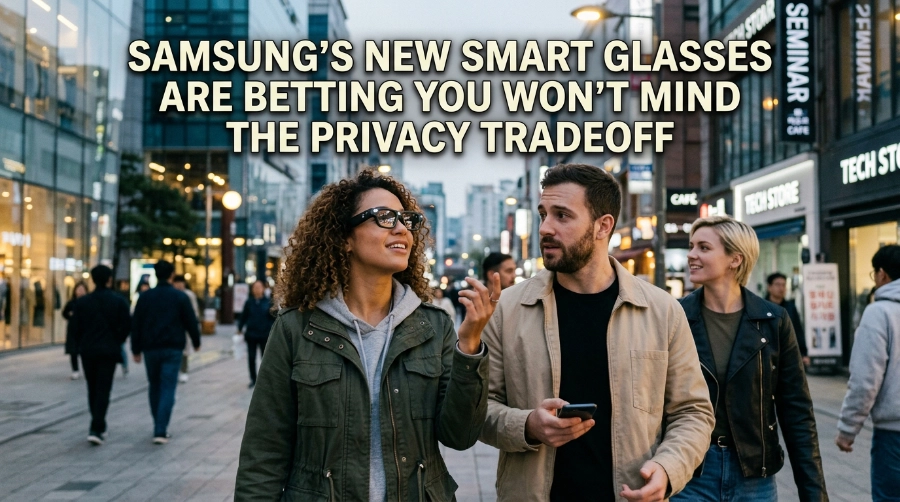
The safeguard here is an LED that lights up when the camera’s recording, plus wear detection to kill the camera when the glasses come off. Cute in theory. It only works if the person next to you notices a tiny light. Watch for it, and don’t count on it saving you.
The promise nobody’s testing yet
Samsung also pledged in writing that it won’t use audio, screen-share, or video to train its AI models, more than most companies bother saying out loud. But a pledge isn’t a policy, and neither Samsung nor Google has published a camera-specific policy for footage after capture. That gap matters: a class action filed in March 2026 alleges Meta’s Ray-Ban footage was reviewed by outside contractors in Kenya, from people who’d only opted into training.
More than just a Samsung problem
The launch landed days after New York banned smart glasses from every state courtroom. Gemini’s terms also log your activity for 18 months and let human reviewers keep some conversations for up to three years. A lawyer at the privacy group NOYB has flagged the whole category over bystander consent and unclear rules under GDPR. Even Apple’s reportedly hitting pause, pushing its own smart glasses to a 2027 unveiling while it works out privacy features of its own.
Slowly getting to public acceptance
Samsung’s bet is that people get used to it, same as with phones filming everything, and the numbers back that up: shipments of display-free smart glasses jumped 167% last quarter. “Public acceptance takes time,” as Choi put it, is doing a lot of quiet work there.
Sources: TechRadar, Bloomberg, Korea Times, Tech Times